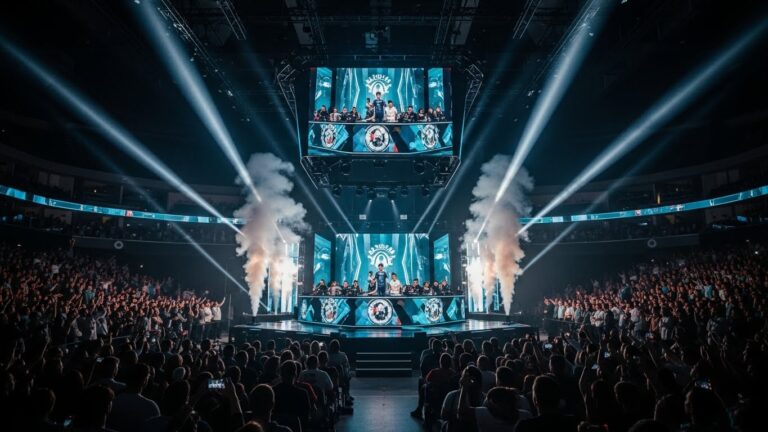
Esports, or competitive gaming, has evolved into one of the most influential sectors in the global entertainment industry. What was once a niche activity for hardcore gamers has now blossomed into a multi-billion-dollar industry, with millions of players and viewers across the world. Tournaments with massive prize pools, professional leagues, and lucrative sponsorships are now common in the esports ecosystem. In this blog post, we will explore the growth of esports, its impact on both the gaming and traditional sports industries, and what the future holds for competitive gaming.
The Early Days of Esports
While competitive gaming dates back to the early 1970s, when the first tournament around the game Spacewar was held at Stanford University, esports did not truly begin to take shape until the late 1990s. The proliferation of the internet and the rise of multiplayer online games created the perfect environment for competitive gaming to flourish. During this time, titles such as Quake, StarCraft, and Warcraft helped pave the way for esports as we know it today.
In South Korea, the rise of StarCraft in the late 1990s is often seen as the catalyst for the esports movement. The game’s popularity led to the creation of professional leagues, dedicated TV channels, and even government backing. By the early 2000s, South Korea was home to some of the most famous esports players in the world, and the country’s obsession with competitive gaming would serve as a model for the rest of the world.
However, esports remained largely confined to a small but dedicated community until the 2010s when a combination of improved internet infrastructure, streaming platforms, and the mainstream adoption of video games brought esports into the limelight. It was in this era that titles like League of Legends, Dota 2, and Counter-Strike: Global Offensive became staples of the competitive gaming scene.
The Explosion of Esports in the 2010s
The 2010s marked a defining decade for esports. As games became more sophisticated and internet speeds increased, esports grew exponentially. League of Legends, developed by Riot Games, became one of the most popular esports titles in history. Launched in 2009, League of Legends created a competitive scene with organized tournaments, culminating in the annual League of Legends World Championship, known simply as “Worlds.” In 2013, Worlds attracted over 32 million viewers, a number that would continue to climb in the years that followed.
Similarly, Dota 2, developed by Valve Corporation, introduced one of the largest prize pools in esports history with its annual tournament, The International. In 2011, The International featured a $1 million prize pool, but by 2021, the prize pool had ballooned to over $40 million, thanks to crowdfunding from the game’s community. This staggering prize money attracted top players from around the world, solidifying Dota 2 as one of the most prestigious esports games.
The rise of streaming platforms like Twitch also played a pivotal role in the growth of esports. Launched in 2011, Twitch quickly became the go-to platform for gamers to broadcast their gameplay and tournaments to a global audience. In just a few years, esports tournaments began to draw millions of viewers worldwide, and players and commentators found a new way to engage with fans. By 2015, Twitch had grown to over 100 million monthly active users, further establishing esports as a mainstream form of entertainment.
The Emergence of Esports Leagues and Organizations
One of the key developments in esports has been the professionalization of competitive gaming. In the early days of esports, tournaments were often disorganized and informal. However, as the industry grew, dedicated esports leagues and organizations were formed, bringing a sense of structure and legitimacy to competitive gaming.
The League of Legends Championship Series (LCS), established in 2013, became one of the first major esports leagues to operate on a franchise model, similar to traditional sports leagues like the NBA or NFL. Teams signed players to contracts, and the league itself became a year-round competition with regular seasons, playoffs, and championships. This model has since been replicated by other esports titles, including Overwatch with the Overwatch League and Call of Duty with the Call of Duty League.
In addition to these league-based structures, there has been a rise in esports organizations that manage and represent professional teams. Companies such as Cloud9, Team Liquid, and T1 have built successful esports empires, signing top players, securing sponsorships, and organizing their own branded content. These organizations have played an instrumental role in the professionalization of esports, creating the necessary infrastructure to support players and fans alike.
Sponsorships and the Commercialization of Esports
As esports gained popularity, it attracted the attention of major global brands looking to tap into the gaming community. Sponsorships became a major revenue stream for esports organizations and tournaments, and partnerships with companies in industries like technology, energy drinks, and apparel helped further legitimize competitive gaming as a commercial enterprise.
Major companies like Intel, Coca-Cola, Red Bull, and Nike all became active sponsors of esports tournaments and teams. These companies recognized that esports offered a valuable marketing opportunity, with access to a highly engaged and youthful demographic. Sponsorships not only provided financial support for tournaments but also allowed brands to create content, engage with fans, and strengthen their position in the growing gaming market.
The increased commercial interest also meant that prize pools for major tournaments grew significantly. Tournaments such as The International and League of Legends World Championships have consistently offered multi-million dollar prize pools, attracting top-tier talent from around the world. Players, too, began to see esports as a viable career option, with some top competitors earning six-figure salaries from tournament winnings, sponsorships, and streaming revenue.
Esports and Traditional Sports: A New Paradigm
As esports grew, it began to draw comparisons to traditional sports. The professionalization of competitive gaming, the organization of leagues, the sponsorships, and the dedicated fanbases all mirrored the structure of conventional sports like football, basketball, and soccer. Esports organizations began to hire coaches, analysts, and managers—roles similar to those in traditional sports teams. Teams traveled the world to compete in international tournaments, and dedicated fanbases emerged around each team and player.
This parallel growth between esports and traditional sports led to increased crossover between the two industries. Major sports leagues like the NBA, NFL, and European football clubs began to invest in esports teams. For instance, in 2018, the NBA launched the NBA 2K League, where teams owned by NBA franchises compete in a virtual basketball game. This initiative created a direct link between professional sports and esports, with traditional sports entities recognizing the value of the esports market.
Esports has also made its way into mainstream media. Major broadcasters such as ESPN and Turner Broadcasting have aired esports events, and even non-gaming-focused media outlets have started covering competitive gaming. Esports events are now regularly featured in major international sports venues, and the presence of live audiences at events like Worlds and The International has further cemented esports as a global entertainment phenomenon.
The Rise of Mobile Esports
While traditional esports primarily focused on PC and console gaming, mobile gaming has seen explosive growth in recent years, and mobile esports has become a major player in the industry. Games like PUBG Mobile, Free Fire, and Mobile Legends have developed massive competitive scenes, particularly in regions like Southeast Asia, India, and Latin America.
The accessibility of mobile gaming has allowed esports to reach a broader audience. Unlike PC gaming, which often requires expensive hardware, mobile games can be played on smartphones, which are more affordable and widely available. This democratization of gaming has helped expand the esports community, attracting new players and fans from diverse backgrounds.
Mobile esports tournaments have grown in stature, with events like the PUBG Mobile Global Championship offering prize pools comparable to those of PC-based esports events. The potential of mobile esports to reach new markets has made it a key area of focus for developers and organizers looking to expand the global reach of competitive gaming.
The Future of Esports: What Lies Ahead
As esports continues to grow, its future seems incredibly promising. The continued development of gaming technology, especially in areas like virtual reality (VR) and augmented reality (AR), could revolutionize the esports experience. VR, in particular, could offer fully immersive competitive gaming experiences, where players are physically inside the game world, making the competition even more dynamic and engaging.
The potential for esports to become a part of the Olympic Games is also an exciting possibility. While esports has not yet been included in the Olympics, discussions around its inclusion have been gaining momentum. If esports were to be accepted as an Olympic sport, it would represent a significant milestone in the legitimization of competitive gaming as a global activity.
Another trend to watch is the continued growth of female participation in esports. While the industry has traditionally been male-dominated, more women are breaking into competitive gaming, both as players and as part of the esports infrastructure. As the industry becomes more inclusive and diverse, it will continue to foster innovation and attract new talent from a broader demographic.
Conclusion
Esports has come a long way from its humble beginnings. It has transformed from a niche hobby into a multi-billion-dollar industry, with professional leagues, global sponsorships, and millions of fans around the world. As technology advances, the possibilities for esports are limitless. Whether it’s through virtual reality, the expansion of mobile esports, or its potential inclusion in the Olympics, competitive gaming is poised to remain a major force in the global entertainment landscape for years to come. For fans and players alike, esports is not just a game—it’s a way of life.
About the Author