Introduction: The Birth of a Digital Arena
Just a few decades ago, video games were seen as simple pastimes—a way to escape reality or spend a lazy weekend with friends. Fast forward to today, and gaming has evolved into a billion-dollar industry that rivals traditional sports in viewership, sponsorships, and global influence. This transformation has given rise to what we now call Esports—organized, competitive video gaming that brings together players, teams, and millions of fans worldwide.
Esports is no longer a niche interest confined to teenagers in dimly lit rooms. It’s a thriving entertainment ecosystem that blends skill, technology, and community in a way no other form of competition does. The story of how Esports went from local arcade battles to international stadium events is one of innovation, perseverance, and cultural change.
The Early Days: When Gaming Went Competitive
The origins of Esports can be traced back to the late 1970s and early 1980s when arcade games like Space Invaders, Pong, and Pac-Man first captured the public’s imagination. In 1980, Atari hosted the Space Invaders Championship, widely considered the first major video game tournament. Over 10,000 players participated, setting the stage for the idea that gaming could be more than a casual activity—it could be a sport.
During the 1990s, as personal computers became more accessible, competitive gaming gained momentum. Titles like Doom, Quake, and StarCraft introduced multiplayer competition that extended beyond local arcades. LAN parties—where players physically connected their computers to battle in the same room—were the birthplace of community-based competition.
It wasn’t glamorous, but it was passionate. Players competed for bragging rights, small cash prizes, or even just pizza. Yet, those grassroots beginnings built the foundation for what Esports would become: a structured, team-based competition recognized worldwide.
The 2000s: Online Connectivity Changes Everything
The arrival of high-speed internet in the early 2000s changed the landscape entirely. Games could now be played online, eliminating physical boundaries and creating a global competitive scene. South Korea was one of the first countries to embrace Esports on a national scale. Government support, dedicated gaming television channels, and professional leagues for titles like StarCraft turned pro gamers into celebrities.
In the West, games like Counter-Strike, Halo, and Warcraft III began attracting large online communities. Early tournaments such as the World Cyber Games (WCG) and Electronic Sports World Cup (ESWC) gave players the chance to represent their countries, much like athletes in the Olympics.
Suddenly, gaming wasn’t just a hobby—it was a career. Players began training full-time, sponsors entered the scene, and the term “Esports athlete” started to gain legitimacy. The dream of making a living by playing games was no longer far-fetched.
The 2010s: The Golden Era of Esports
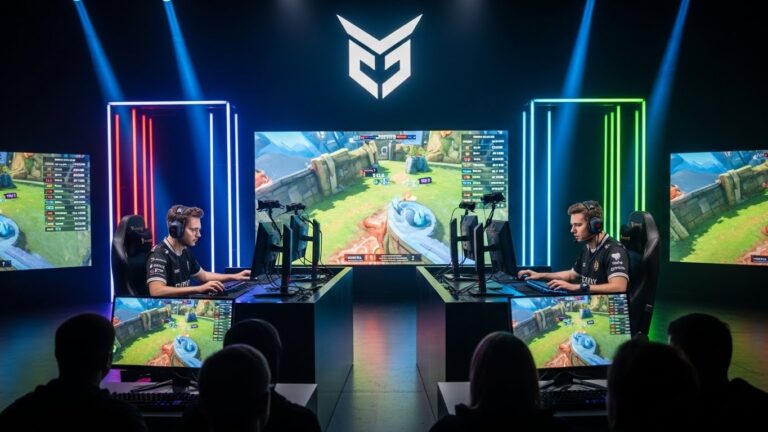
The 2010s marked the decade when Esports truly exploded into the mainstream. Streaming platforms like Twitch allowed players to broadcast matches to millions of fans worldwide. Viewers could now watch live competitions, interact with players, and become part of the gaming community in real time.
Games like League of Legends, Dota 2, and Counter-Strike: Global Offensive defined this era. Each developed massive professional circuits, complete with regional leagues, global championships, and million-dollar prize pools.
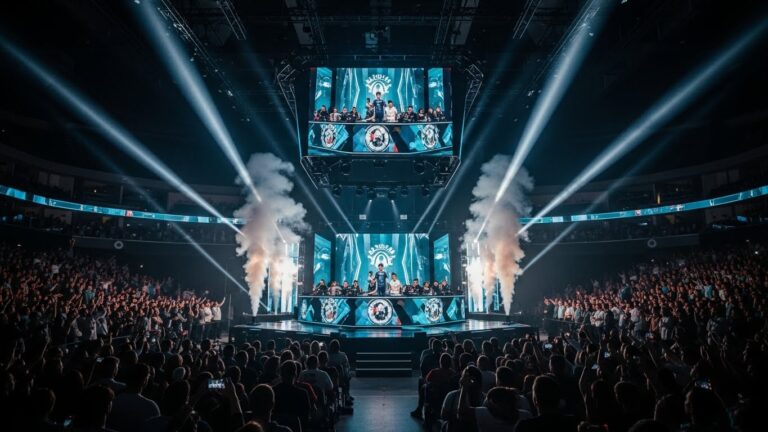
The League of Legends World Championship filled entire stadiums and drew online audiences in the tens of millions. Dota 2’s The International shattered records with prize pools exceeding $30 million, largely crowdfunded by fans themselves.
Esports had finally earned its place in mainstream culture. It was featured on major sports networks, sponsored by global brands, and even recognized by universities that began offering scholarships to talented players.
The Business of Esports: More Than Just Gaming
Behind the flashing lights and roaring crowds lies a complex business ecosystem. Esports isn’t just about players and tournaments—it’s an entire industry built on sponsorships, broadcasting rights, merchandising, and content creation.
Big companies such as Intel, Red Bull, and Coca-Cola began investing heavily, realizing that the gaming demographic was young, global, and deeply engaged. Esports organizations became structured like traditional sports teams, with coaches, analysts, and marketing departments.
Franchise-based leagues emerged, such as the Overwatch League and the Call of Duty League, modeled after the NBA and NFL. Teams bought franchise spots for millions of dollars, securing long-term stability in an industry that once seemed unpredictable.
Broadcast rights also became a major revenue stream. Platforms like YouTube Gaming and Twitch fought for exclusivity deals, while networks like ESPN and BBC began airing Esports tournaments. This commercial growth proved one thing: Esports wasn’t just entertainment—it was big business.
The Culture of Esports: A Global Community
What makes Esports so powerful isn’t just the competition—it’s the culture that surrounds it. Gaming transcends language, geography, and background. A teenager in Brazil can team up with a player from Sweden or face off against someone in South Korea.
Fan communities form around games, teams, and even individual players. Online forums, social media, and live chat platforms give fans direct access to their favorite competitors. The level of engagement is unmatched—fans don’t just watch; they participate.
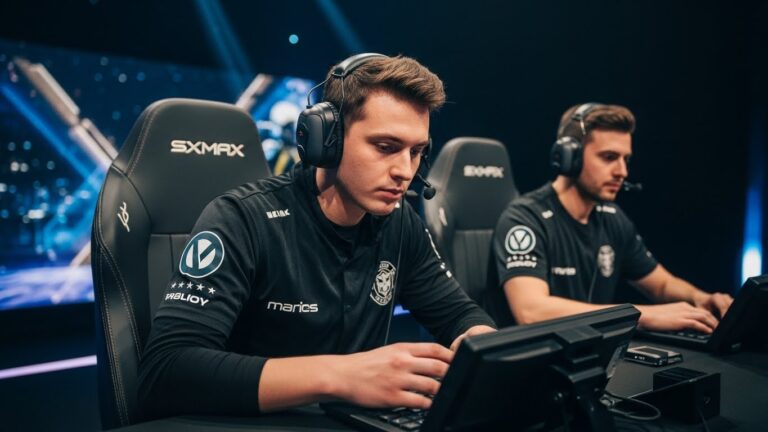
Esports also redefined celebrity culture. Professional players like Faker, s1mple, and Ninja became household names, not because of Hollywood fame, but through skill, consistency, and connection with fans. They stream, create content, and often engage with their audiences daily—something traditional athletes rarely do.
Moreover, the culture encourages diversity in participation. While gaming still faces challenges in inclusivity, Esports has opened doors for people across genders, backgrounds, and abilities to find community and purpose.
Training, Discipline, and the Esports Athlete
There’s a misconception that gaming professionally means sitting around all day. In reality, Esports athletes follow strict schedules that rival traditional sports training.
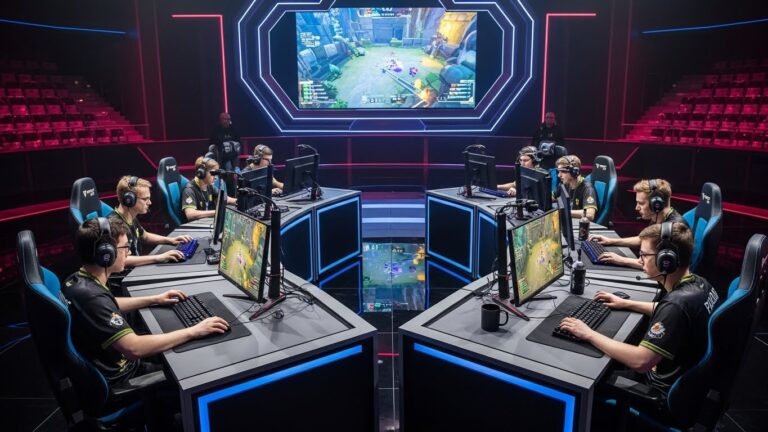
Professional players often train eight to twelve hours a day, analyzing strategies, reviewing replays, and working with coaches to refine mechanics. Mental endurance, hand-eye coordination, and decision-making under pressure are crucial skills.
Top teams employ psychologists, nutritionists, and fitness trainers to maintain players’ physical and mental health. Reaction time, focus, and teamwork are treated as measurable performance metrics.
Just like football or basketball players, Esports athletes face burnout, stress, and injuries—carpal tunnel, eye strain, and mental fatigue being the most common. As the industry matures, so does the support system around these professionals.
Esports in Education: A New Path for Students
Universities and schools worldwide are recognizing the educational potential of Esports. Many now offer degrees in game design, Esports management, and digital marketing focused on the gaming industry.
Scholarships for competitive gaming are becoming more common. In the United States, institutions like the University of California–Irvine and Harrisburg University offer full-ride scholarships to top Esports players.
Beyond competition, Esports programs teach valuable skills like teamwork, communication, strategic thinking, and leadership. For many students, gaming becomes a gateway into careers in technology, broadcasting, or entrepreneurship.
This educational shift shows that gaming is no longer dismissed as a distraction—it’s seen as an opportunity to develop both technical and interpersonal skills.
The Role of Technology in Esports Evolution
Technology has always been at the heart of Esports, and it continues to push the boundaries of what’s possible.
Faster internet, better graphics, and advanced gaming hardware have made competitive gaming smoother and more immersive. Cloud gaming, virtual reality (VR), and augmented reality (AR) are now emerging technologies with the potential to redefine how audiences watch and players compete.
Artificial intelligence is also becoming part of Esports training. Data analysis tools can break down gameplay footage, offering insights on player tendencies and opponent weaknesses. Machine learning models help predict in-game outcomes and suggest optimal strategies.
Meanwhile, blockchain technology and digital collectibles are opening new doors for fan engagement, offering unique rewards and loyalty systems that bridge the gap between gaming and ownership.
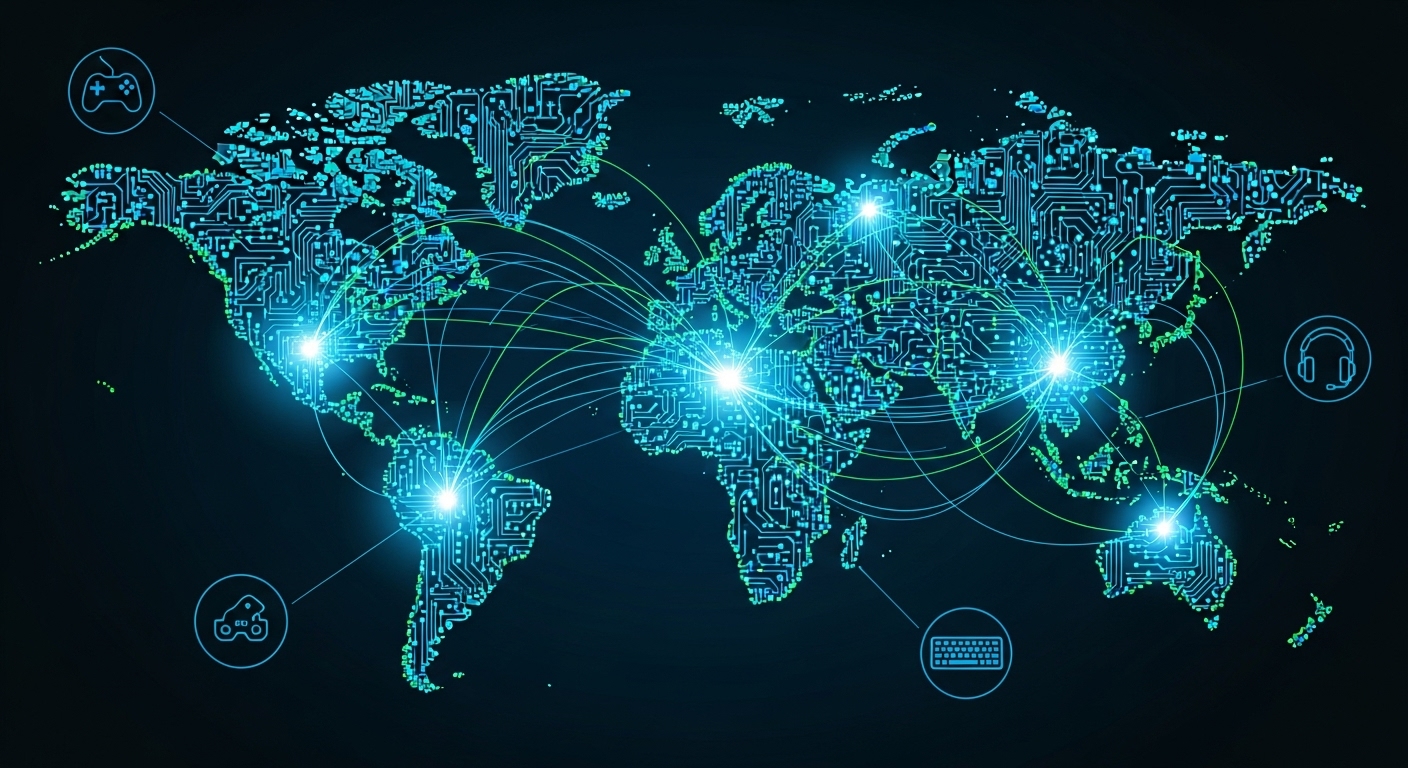
The Global Stage: Esports Around the World
Esports is one of the few truly global industries. While traditional sports often have regional popularity, Esports transcends borders.
- Asia remains the heart of Esports, particularly South Korea and China. South Korea’s professional infrastructure and public acceptance of gaming as a legitimate career have made it a model for the rest of the world.
- Europe has produced powerhouse teams in CS:GO, Dota 2, and FIFA, with strong regional leagues and player development systems.
- North America leads in commercialization, with franchise-based leagues, huge sponsorship deals, and a strong streaming culture.
- South America, the Middle East, and Africa are fast-rising markets, driven by mobile gaming and growing internet access.
No matter the region, Esports connects people through competition, entertainment, and shared passion.
Esports and Traditional Sports: Rivals or Partners?
For years, traditional sports fans and media outlets debated whether Esports should even be considered a “sport.” But as time went on, that debate lost weight.
Both involve competition, skill, teamwork, and training. The only difference is the arena—one physical, the other digital. Many sports organizations now see Esports as an ally rather than a rival.
The NBA launched the NBA 2K League, FIFA supports global gaming tournaments, and Formula 1 runs official Esports championships. Some athletes invest directly in Esports teams, seeing the potential for growth and crossover audiences.
This collaboration is not about replacing traditional sports—it’s about expanding what “sports” can mean in the 21st century.
Challenges Facing the Esports Industry
Despite its success, Esports still faces growing pains.
Player burnout is one of the most pressing issues. The constant pressure to perform, paired with long training hours and online scrutiny, can lead to mental health struggles.
Financial stability is another challenge. While top players earn millions, smaller organizations often struggle to sustain operations without major sponsors. Prize money distribution and contract transparency remain ongoing concerns.
Cheating and match-fixing have also tarnished the industry’s reputation at times. With money and fame on the line, integrity has become a major focus for Esports regulators and event organizers.
Lastly, gender inequality continues to be a barrier. Although women play and watch games in large numbers, representation in top competitive tiers remains low. Initiatives promoting inclusivity are growing, but the path forward requires consistent effort.
The Pandemic Effect: Esports Takes the Spotlight
When the world shut down during the COVID-19 pandemic, live sports came to a halt. Esports, however, thrived. With digital infrastructure already in place, tournaments seamlessly moved online.
During this period, Esports viewership skyrocketed. People stuck at home turned to gaming both as entertainment and social connection. Traditional sports networks even aired Esports events to fill broadcast gaps.
This unexpected moment showed the resilience of Esports and solidified its role in mainstream culture. It wasn’t a backup plan anymore—it was the main event.
The Future of Esports: Where Do We Go from Here?
Looking ahead, the future of Esports is promising yet unpredictable. As technology evolves, so will the games, the platforms, and the ways fans engage.
Mobile Esports are expected to dominate in emerging markets, thanks to accessibility and lower hardware costs. Games like PUBG Mobile and Mobile Legends already boast massive competitive scenes.
Virtual reality and augmented reality could create entirely new forms of competition, blending physical movement with digital gameplay. And as broadcast quality improves, Esports will continue to blur the line between gaming and cinematic entertainment.
On a social level, Esports has the power to unite generations. Parents who grew up with consoles now watch competitions with their children. The once-isolated act of gaming has become a shared experience, fostering connection and creativity.
Conclusion: More Than a Game
Esports is no longer an underground movement—it’s a global cultural force that reshaped how we define competition, entertainment, and community.
From small arcade tournaments to packed stadiums and international broadcasts, the journey of Esports reflects the evolution of technology and human ambition. It represents more than skillful gameplay; it’s about persistence, innovation, and the unbreakable spirit of those who dared to take gaming seriously.
As the industry continues to grow, one truth remains clear: Esports isn’t just the future of gaming—it’s the future of sports itself.
About the Author