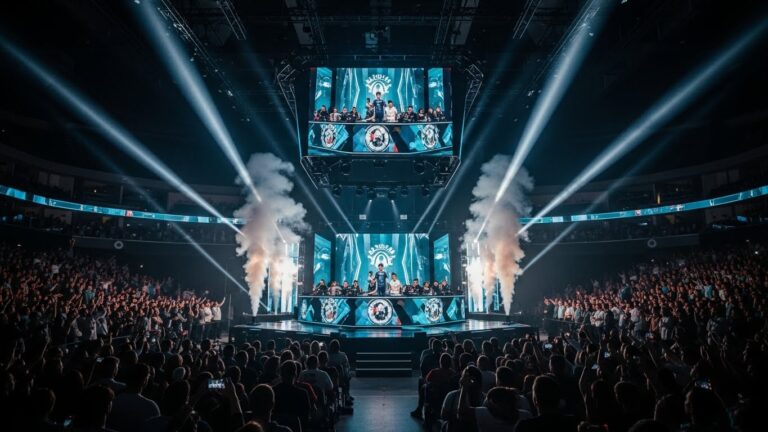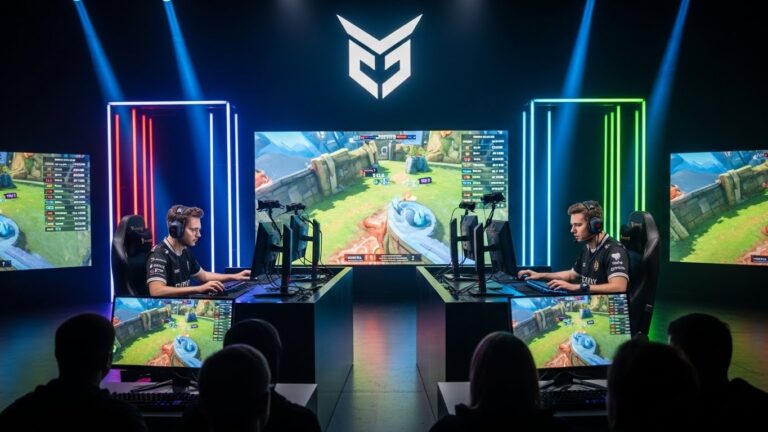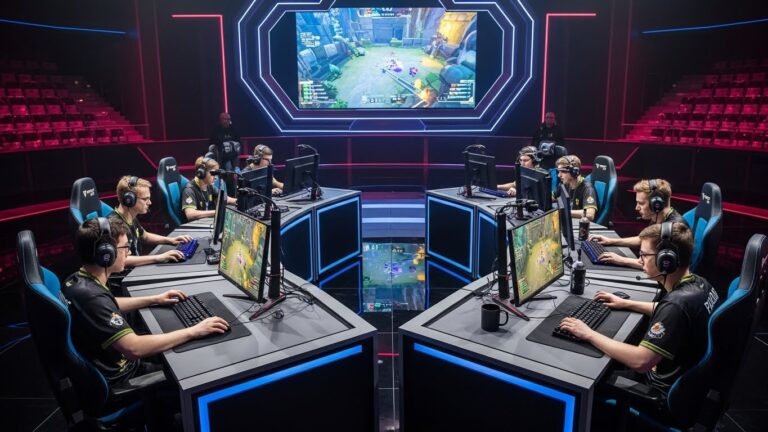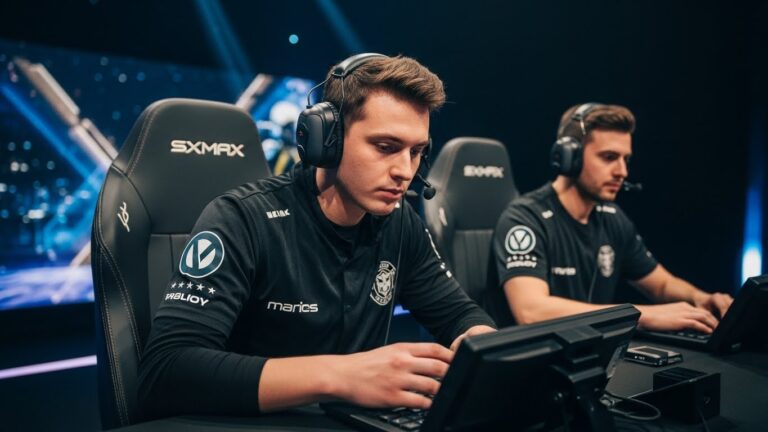
In a world where digital landscapes increasingly intersect with our daily lives, esports stands at the crossroads of entertainment, competition, and community. What once began as casual gaming tournaments has today blossomed into a billion‑dollar global industry with star athletes, passionate fan bases, high-stakes sponsorships, and constant technological innovation. In this article, we’ll journey through the evolution, present reality, challenges, and future of esports. Strap in — this is your front‑row seat to the new era of competitive gaming.
The Rise of Esports: From LAN Parties to Global Stadiums
Early Beginnings and Grassroots Growth
In the 1990s and early 2000s, gaming competitions were confined to local LAN parties, arcades, or small community gatherings. Enthusiast gamers would bring their PCs, routers, and network cables and connect in a basement or school hall to battle it out in Doom, Quake, StarCraft, or Counter‑Strike. These modest events lacked prize pools, streaming platforms, or professional teams. They were driven purely by passion.
Over time, as internet connections improved and gaming communities grew online, small tournaments began offering cash prizes and sponsorships. A decade ago, many would have scoffed at the idea of “professional gamers” but today the concept is firmly real. What began as hobbyist competition has matured into a full-fledged industry.
Explosion of Viewership and Monetization
The turning point for esports came when streaming platforms—most notably Twitch, YouTube Gaming, and others—made live gameplay accessible to the masses. Suddenly, fans from around the globe could tune into a tournament final, watch their favorite teams, and follow player stories in real time. Esports viewership grew exponentially, attracting advertisers, sponsors, and media rights deals.
With increased money flowing in, prize pools for top-tier tournaments escalated. The stakes got higher, teams began recruiting managers, coaches, analysts, and content creators. Esports became not just about raw skill, but about brand-building, community engagement, and long-term sustainability.
Understanding the Ecosystem: Key Actors and Dynamics
To truly appreciate the complexity of esports, it helps to break down its major components and stakeholders.
Teams, Players & Support Staff
At the heart of every competition lie teams and individual players. But modern esports organizations often include:
- Coaches and Analysts: They study opponent strategies, meta shifts, and player performance.
- Support Staff: Nutritionists, psychologists, physical trainers (especially for posture, reaction training, and wellness).
- Content Creators / Streamers: Many pro players also maintain streaming identities, producing content outside tournament play to stay connected with fans.
- Managers and Agents: They negotiate contracts, secure sponsorships, and guide career trajectories.
Tournaments, Leagues & Esports Circuits
Esports tournaments vary in scale:
- Local / Regional Cups: Entry-level or semi‑pro events, sometimes open to qualifiers.
- Regional Leagues: For example, Europe, Asia, North America often have their own circuits (e.g. “LEC”, “LCK”, “LCS” in League of Legends).
- International Majors / Worlds: The pinnacle events (World Championships) where regional champions clash for supremacy.
- National / Multinational Events: New initiatives like the Esports Nations Cup (slated to debut in 2026) will pit national teams against each other across multiple game titles.
- Special Invitational Events: Unique formats, brand-sponsored tournaments, showmatches, or crossover events.
Fans, Streaming & Content Platforms
Esports is unlike many traditional sports in that content and story are as important as the match itself. Fans engage through:
- Live streams: Watching matches, following commentary, interacting in chat.
- Clips / Highlights / VODs: Key moments extracted for viral reach.
- Social media, Discord, Reddit, community forums: For discussion, memes, fan art, and discourse.
- Fan events and activations: Meetups, viewing parties, cosplay zones, merchandise popups.
Sponsors, Brands & Investors
Money is the lifeblood of large-scale esports. Sponsors range from endemic (gaming hardware, peripherals, software publishers) to non-endemic (apparel, energy drinks, automobile, telecom, consumer brands). They invest in:
- Event sponsorship and naming rights.
- Team or player partnerships.
- Media rights and advertising.
- Branded content, in-game skins, or co‑branded campaigns.
Institutional investors and venture capital firms also now see esports as a legitimate growth industry, fueling acquisitions, mergers, and new startups.
Technology & Infrastructure Providers
Underpinning every match are numerous technical systems:
- Match & server infrastructure (dedicated match servers, anti-lag, redundancy).
- Broadcast and production tools (multi-camera setups, live overlays, slow motion, AR/VR enhancements).
- Analytics, telemetrics, and data pipelines.
- Anti-cheat, integrity monitoring, fraud detection tools.
- Community & esports platform software (matchmaking, bracket tools, league dashboards).
Major Trends Shaping Esports Today
The esports world is moving fast. Below are some of the most influential trends defining the landscape in 2025.
1. Mobile Esports Domination
Mobile gaming now commands a lion’s share of global gaming audiences, especially in emerging markets. Titles like PUBG Mobile, Mobile Legends, Free Fire, and Arena of Valor are no longer casual titles—they are serious competitive platforms.
Because most people already own a smartphone, mobile esports lowers the barrier to entry. It also opens new regional growth paths in Africa, Southeast Asia, Latin America, and South Asia.
2. Integration of AI and Machine Learning
AI is infiltrating every layer of esports:
- In player training: Tools that analyze frame data, action latency, decision trees, habit patterns, and suggest improvements.
- In scouting and recruiting: Algorithmically identifying up-and-coming talent through their in-game metrics.
- In broadcast & content features: Real-time prediction models, highlight generation, personalized streams, smart overlays.
- In integrity: Cheating detection, anti‑fraud systems, behavioral pattern analysis.
- In skill rating systems: New frameworks that go beyond win/loss, such as PandaSkill, which estimates individual contributions and combines regional meta insights.
3. Augmented Reality (AR) / Virtual Reality (VR) Integration
As AR/VR tech matures, the way we watch esports is evolving as well:
- For spectators: Virtual arenas where fans can “sit” in a digital stadium, view matches from multiple perspectives, overlay stats, or even interact socially.
- For broadcasting: AR overlays showing dynamic statistics, heat maps, player metrics superimposed on live video
- Emerging VR-only competitive formats: Titles designed specifically for immersive environments may become new esports categories.
4. Rise of Creator-led Esports Organizations
Traditionally, esports teams were built by gaming organizations or investors. Now, streamers, influencers, and content creators are creating their own pro teams by leveraging existing fanbases. This hybrid model blends competitive gameplay with entertainment, storytelling, and brand identity
These teams rely less on traditional pro infrastructure and more on community, personality, and audience engagement.
5. Regionalization vs. Globalization
While global tournaments remain iconic, regional leagues and circuits are gaining prominence. They allow:
- More localized engagement and development of homegrown talent.
- Easier access for sponsors targeting specific markets.
- Stability through consistent seasonal play rather than occasional mega‑events.
- A stepping stone pipeline to global events.
- More frequent content and brand activation cycles.
6. Esports Goes National
With the announcement of the Esports Nations Cup, we’re seeing the institutionalization of esports under national banners. In this format, elite players will represent their countries across multiple titles. This evolution helps bridge the gap between traditional sports and esports, adds patriotic narratives, and introduces new dynamics of team composition and national support.
7. Inclusion, Diversity & Women’s Esports
Esports is increasingly focusing on inclusive practices and representation. Women-only tournaments are gaining traction, and investments are being made to bring more diversity in teams, commentary, and leadership roles. Diversity not only fosters equity, but also broadens the fan base and storytelling potential.
8. Esports as a Recognized Sporting Discipline
The official recognition of esports in multi-sport events is a major milestone. For example:
- Esports will be included in the 2026 Asian Games as a medal event across multiple titles.
- Talks are underway for the Olympic Esports Games as part of a 12-year IOC partnership beginning in 2025.
Such moves validate esports’ legitimacy and open pathways for funding, regulation, and structured development.
Challenges & Pitfalls: Hurdles to Overcome
No revolution is without friction. Esports still faces significant barriers on multiple fronts.
Burnout & Mental Health
Pro gamers often maintain grueling training schedules, long hours of screen time, intense pressure, and irregular sleep cycles. Mental health, stress, and burnout are real concerns that teams must address proactively with support structures.
Longevity & Career Transitions
Esports careers tend to be short. Reflexes slow, priorities shift, and new talent floods in. This makes planning for life after playing critical. Many organizations now offer coaching, content roles, or management roles post-competitive years.
Regional Imbalances & Access Gaps
Some parts of the world lack robust infrastructure—fast and stable internet, modern hardware, tournament ecosystems, or sponsorship models. This limits opportunities for talented players outside “esports hubs.”
Monetization and Financial Sustainability
While top-tier teams and events command large sponsorships, many grassroots and mid-level players struggle to monetize. Revenue volatility, changing viewership trends, and reliance on corporate sponsors can be precarious.
Integrity, Cheating, & Match-fixing
The pressure of prize pools invites misconduct. Ensuring fair play, detecting cheating, preventing match-fixing, and maintaining transparent governance are ongoing battles.
Constant Meta & Patch Shocks
Unlike traditional sports (where rules change slowly), esports games are frequently patched and balanced, reshaping the entire meta. Analytical models, strategies, and training routines can be invalidated overnight. Research is ongoing into patch-agnostic analytics that adapt to design changes.
How to Get Involved: Paths for Fans, Players, & Entrepreneurs
As a Gamer / Aspiring Pro
- Start with consistency — train mechanics, understand the meta, play ranked modes.
- Record and analyze your gameplay critically.
- Engage in local tournaments, qualifiers, or amateur circuits.
- Build a streaming presence or social portfolio — content attracts exposure.
- Network with coaches, existing teams, or organizations.
As a Fan / Community Builder
- Watch tournaments, engage in chat and social media.
- Create content — match reviews, highlight reels, analysis pieces.
- Organize local viewing parties or fan-led mini events.
- Support local talent and grassroots competitions.
As a Business / Entrepreneur
- Explore underserved niches: amateur tournaments, coaching platforms, analytics services, integrity tools, broadcasting tools, local hosting, venue infrastructure.
- Partner with brands looking for youth engagement and cultural relevance.
- Build platforms that lower entry barriers (for players, teams, sponsors).
- Consider regionalization strategies — many markets remain underdeveloped.
As a Content Creator / Media Entity
- Bridge the gap between entertainment and competitive content.
- Offer narrative-driven storytelling, behind-the-scenes, player interviews.
- Develop multi-format offerings: short-form clips, deep dives, podcasts, analysis shows.
- Collaborate with esports organizations for exclusive shows or events.
Spotlight: Notable Events & Innovations in 2025
PUBG Mobile World Cup 2025
One of the prominent events this year is the PUBG Mobile World Cup 2025, held in Riyadh, Saudi Arabia, featuring 24 teams and a prize pool of over three million dollars. The event underscores mobile esports’ global clout.
League of Legends World Championship 2025
In 2025, the LoL World Championship final is scheduled for November in Chengdu, China—marking the first time the final will be held in an indoor arena under Riot’s new three-split competitive calendar.
Inaugural Olympic Esports Games
Under the umbrella of a 12-year partnership, the IOC and Saudi Arabia are set to host the first edition of the Olympic Esports Games starting in 2025, aiming to further integrate esports into the global sporting framework.
Esports Nations Cup (ENC)
Announced by the Esports World Cup Foundation, the Esports Nations Cup is designed to pit national teams against one another across multiple game titles, starting in Riyadh in November 2026.
First Stand Tournament (LoL)
The First Stand Tournament (FST) is a League of Legends event introduced in 2025 as part of Riot’s new structure. It takes place after the first split in the competitive season and brings in top teams from regional leagues.
Future Outlook: Where Does Esports Go From Here?
The trajectory of esports suggests even more convergence, sophistication, and scale in the years ahead.
Hybrid & Immersive Experiences
Imagine attending a live event with a VR headset, interacting with digital stages, viewing multiple camera angles, meeting other fans virtually—all in a seamless hybrid model.
Deepening Integration with Traditional Sports
More crossovers will occur—athletes from traditional sports entering esports, co-hosted events, shared marketing, or even integrated leagues. The line between physical and digital competition will blur further.
Evolving Revenue Models
- Tokenization & Fan Tokens: NFTs, blockchain-based club tokens, digital collectibles that grant special access, voting rights, or revenue share.
- Subscription Models: Premium content, ad-free streams, exclusive behind-the-scenes.
- Microtransactions & In-Event Purchases: In-broadcast polls, skins tied to tournament themes.
- Media Rights & Licensing: ESPN‑style aggregation, regional networks licensing esports content.
Smarter Analytics & Decision Making
Data-driven strategies will mature. Models will increasingly consider contextual intelligence (player fatigue, morale data, emotional states) rather than pure metrics. Advanced machine learning, psychological modeling, and physiology integration (e.g., biometric sensors) may define the next frontier.
Governance, Standardization & Ethics
As the industry matures, formal structures will emerge:
- Regulatory bodies for esports integrity, anti-doping, match-fixing policies.
- Standardized contracts, player rights, fair trade practices.
- Greater emphasis on diversity, inclusion, and social responsibility.
- Environmental considerations in hosting mega events (carbon footprints, venue sustainability).
Esports Ecosystem Architects
A new professional role is emerging: the Esports Ecosystem Architect. Rather than simply organizing events, these professionals will design sustainable circuits, hybrid structures, community loops, and revenue architectures that connect players, fans, brands, and platforms holistically.
Conclusion: More Than a Game
Esports is no longer just a niche pastime. It is a dynamic industry, cultural phenomenon, and evolving form of competition. From grassroots players to global tournaments, from digital arenas to include virtual reality, this world is expanding rapidly.
If you’re a gamer hoping to break into pro play, a fan who wants to be part of the community, or an entrepreneur seeking opportunity, the esports ecosystem offers countless entry points. The challenges are real—sustainability, fairness, infrastructure—but the potential is immense. The only certain thing: the game is far from over.
About the Author