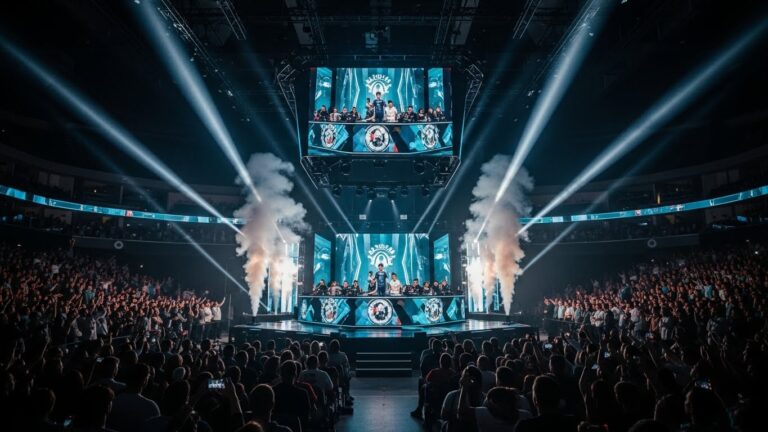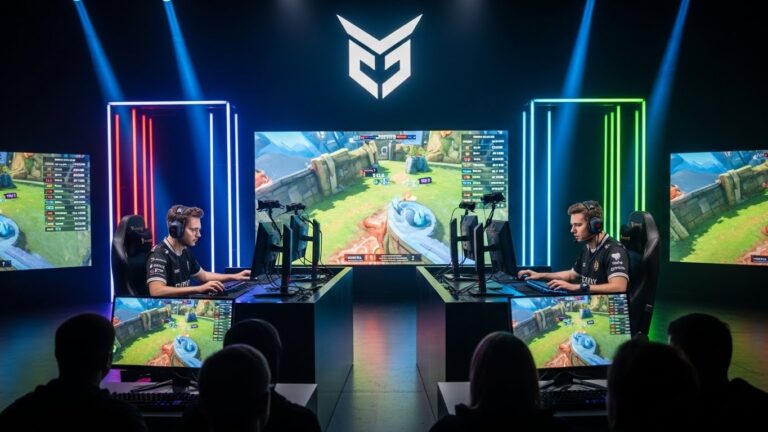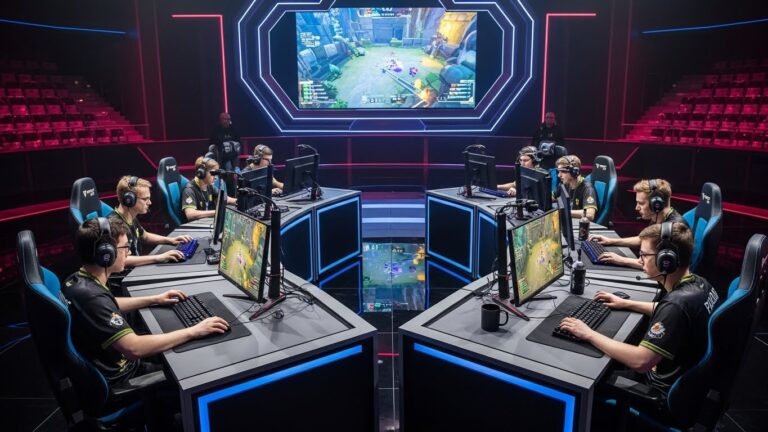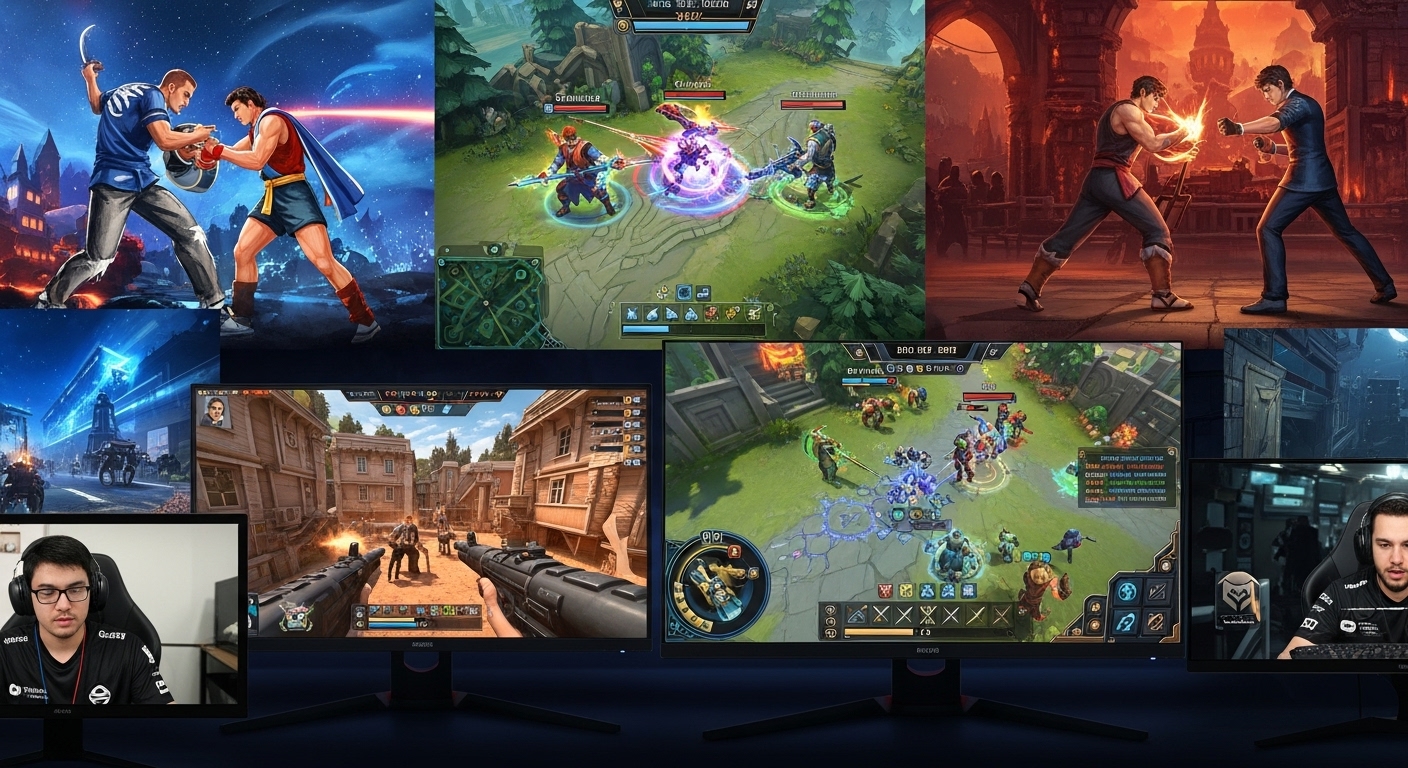
Esports, short for electronic sports, is no longer a niche hobby or underground subculture. It has evolved into a global phenomenon, with millions of fans, professional players, and lucrative sponsorships. What started as competitive gaming among friends has transformed into a multi-billion-dollar industry, with tournaments attracting thousands of spectators both in-person and online. As the lines between traditional sports and esports continue to blur, the question arises: How did esports become such a powerful force, and what does its rise mean for the future of entertainment and competition? Let’s explore the world of esports, its rapid growth, and the cultural impact it’s having on the world.
The Evolution of Esports: From Casual to Competitive
Esports can trace its roots back to the early days of online gaming, where players gathered in small communities to compete against one another. The first notable milestone in competitive gaming occurred in 1997 with the launch of the Red Annihilation tournament for the game Quake, which attracted the attention of gamers worldwide. This marked the beginning of organized gaming competitions, but it was in the 2000s, with the advent of high-speed internet and multiplayer games, that esports began to develop into a serious industry.
In the early 2010s, games like League of Legends, Dota 2, and Counter-Strike: Global Offensive (CS: GO) became central to competitive gaming. Tournaments like the League of Legends World Championship and The International for Dota 2 began offering prize pools in the millions, drawing professional players, large audiences, and lucrative sponsorships. Esports quickly transitioned from an underground pastime to a mainstream competitive spectacle.
The Global Appeal: Esports as a Cultural Movement
What makes esports truly unique is its universal appeal. Unlike traditional sports, where regional and cultural differences often play a role in determining popularity, esports is inherently global. Online gaming transcends borders, allowing players from different countries and backgrounds to compete on a level playing field. Whether it’s a League of Legends player from South Korea, a Fortnite streamer from the United States, or a FIFA competitor from Brazil, esports creates a global network of players and fans.
Tournaments like The International (Dota 2), The Overwatch League, and PUBG Mobile World League attract players and viewers from all over the world. Esports isn’t limited to a particular region or culture, making it one of the most inclusive and diverse forms of entertainment today. As a result, the fanbase is equally diverse—spanning all ages, genders, and ethnicities—creating a sense of global community that traditional sports often cannot replicate.
The Business of Esports: A Multi-Billion Dollar Industry
The financial growth of esports is staggering. What was once an informal scene of gaming enthusiasts has now become a multi-billion-dollar industry. Professional teams, gaming organizations, and influencers have turned esports into a profitable career path, attracting major sponsorships from brands in tech, telecommunications, energy drinks, and even luxury products.
Sponsorship deals with companies like Intel, Coca-Cola, and Nike have propelled esports into the spotlight. Prize money for major tournaments has also skyrocketed—The International 2021, for example, offered a prize pool of over $40 million, the largest in esports history. With media rights, live streaming, and content creation adding to the revenue, esports is quickly becoming as financially robust as traditional sports.
Streaming platforms such as Twitch, YouTube Gaming, and Facebook Gaming have been crucial in esports’ growth, providing a space for players to showcase their skills and for fans to watch their favorite teams and players in action. These platforms have allowed fans to engage with the content on a deeper level, with interactive features like live chats and virtual cheering, further blurring the lines between spectator and participant.
The Professionalization of Esports: Teams, Leagues, and Salaries
Esports has evolved from a hobby to a legitimate profession, and with this shift, the structure of competitive gaming has mirrored that of traditional sports. Professional esports teams now have coaching staff, analysts, and performance managers, much like football or basketball teams. Players undergo rigorous training schedules, often playing several hours a day to hone their skills, improve teamwork, and develop strategies for upcoming competitions.
Esports players are no longer just gamers; they are athletes in their own right. Like traditional sports stars, top players can earn substantial salaries through sponsorships, prize money, and streaming revenue. The professionalization of esports has also led to a rise in collegiate esports programs, where young players can earn scholarships and build a future in the industry.
Leagues and tournaments have also become more formalized. Esports leagues such as the Overwatch League and Call of Duty League follow structured seasons, with teams competing in regular matches leading up to playoffs and finals. These leagues mirror the structure of traditional sports, with regular seasons, playoffs, and championship events, bringing a sense of organization and consistency to the industry.
The Social Impact: Esports and Its Fans
One of the most significant impacts of esports is the way it has fostered online communities and brought people together. Esports fans are some of the most dedicated in the world, often engaging with their favorite teams, players, and games through social media, live streams, and fan forums. Esports has become more than just a form of entertainment; it’s a social experience where fans can connect, discuss, and share their passion for the games they love.
The rise of esports has also contributed to a shift in how we perceive competition and success. In traditional sports, success is often measured by physical prowess, teamwork, and training. In esports, it’s about strategic thinking, quick reflexes, and adaptability. Esports celebrates cognitive skill over physical skill, making it an appealing option for a new generation of gamers who may not fit the mold of traditional athletes.
Esports has also opened up doors for inclusivity, allowing people of all physical abilities and backgrounds to participate. The competitive gaming scene has become a platform where everyone has the opportunity to excel, regardless of gender, race, or physical limitations.
Esports and the Future: The Road Ahead
The future of esports is incredibly bright, with further advancements in technology, game design, and virtual reality set to propel the industry even further. As VR and AR technologies improve, it’s possible that we’ll see new kinds of immersive experiences where players can literally step into the game world. Furthermore, as more universities and institutions begin to recognize esports as a legitimate career option, the pipeline of talent will only continue to grow.
One area where esports may experience exponential growth is in the realm of mobile gaming. Games like PUBG Mobile and Free Fire have already garnered massive audiences, and as mobile technology continues to improve, it’s likely that mobile esports will continue to expand and compete with traditional PC and console-based games.
Esports will also continue to push the boundaries of cross-platform play, where players from different devices—PC, console, and mobile—can compete against each other. This could create a more unified and competitive gaming landscape, making it easier for players to compete and collaborate with others no matter what platform they use.
Conclusion: Esports as a Mainstream Staple
Esports is no longer just a pastime—it’s a cultural, social, and economic powerhouse. With its massive fan base, professional athletes, and rapidly growing market, esports has firmly cemented itself as a mainstream form of entertainment. Whether you’re a casual gamer, a dedicated fan, or a professional player, the world of esports offers something for everyone. As the industry continues to grow and evolve, one thing is certain: esports is here to stay, and its influence on the global entertainment landscape will only continue to expand.
About the Author